
Do You Actually Need a Digital Twin? A Practical Guide for Decision-Makers
Are you considering building a digital twin but unsure if it's the right investment? We walk you through the questions that identify your real business needs — from platform selection to data strategy.
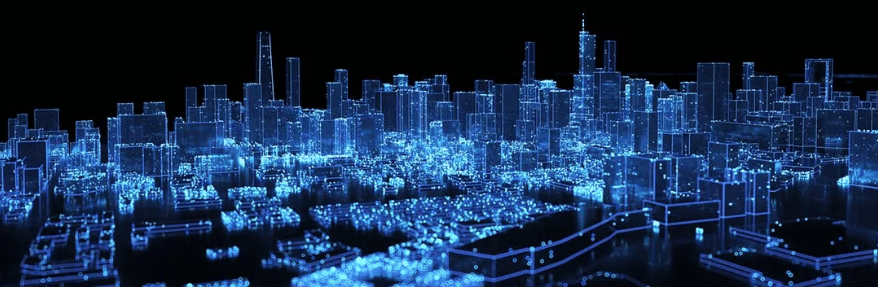
Are you considering building the digital twin of your system but lacking the technological background? Maybe you see digital twins as fancy toys rather than an actual tool that impacts your business. Let us walk you through the questions that identify your business needs so that you can make sure you are investing in the right tool.
What is a Digital Twin?
In the current technological landscape, a digital twin is defined as a high-fidelity, dynamic virtual replica of a physical asset, system, or process. Unlike static 3D models, digital twins function as cloud-enabled counterparts that maintain continuous, real-time synchronization with their physical twins by integrating operational data and Key Performance Indicators (KPIs) through IoT sensors and streaming mechanisms. This bidirectional link allows organizations to monitor, simulate, and analyze the behavior of complex systems throughout their entire lifecycle without risking real-world consequences.
By serving as an "operating system" for physical environments, digital twins transform raw telemetry into actionable intelligence across diverse critical infrastructures:
- Construction & Mine Sites: They enhance project management by monitoring site conditions in real-time, improving safety, and optimizing resource extraction or building phases from design to demolition.
- Ports & Warehouses: Digital supply chain twins provide total visibility into logistical flows, enabling managers to automate movements, reduce congestion, and build more agile networks.
- Network Towers & Orchestration: They allow for the remote monitoring of signal health and structural integrity, transforming hardware into monitorable and controllable digital assets.
- Hospitals: In the "Smart Hospital" context, they are used to optimize patient and staff flows, manage energy consumption, and even simulate complex surgical procedures to increase medical precision.
Ultimately, the goal of a digital twin is to achieve operational excellence through predictive maintenance and proactive management, ensuring that issues are identified and resolved in the digital realm before they impact the physical world.
Why Would You Need A Digital Twin?
A digital twin acts as a bridge between the physical and digital worlds, allowing businesses to operate with a proactive rather than reactive mindset. At its core, the need for a digital twin stems from the desire to achieve operational excellence by identifying and resolving issues in a virtual environment before they ever impact the physical world. By transforming raw data into actionable intelligence, these virtual replicas allow for continuous monitoring and simulation without the risk of real-world consequences.
The strategic utility of a digital twin lies in its ability to provide predictive maintenance and risk-free simulation. Instead of repairing equipment only after a failure occurs, businesses can use real-time health data to anticipate maintenance needs, thereby reducing downtime and costs. Furthermore, digital twins allow organizations to test "what-if" scenarios — such as supply chain disruptions or structural changes — within a safe virtual space.
In the sectors of construction and mining, digital twins are essential for enhancing project management and ensuring safety in hazardous environments. For instance, the mining giant Rio Tinto has implemented digital twins within its "Mine of the Future" project to coordinate autonomous hauling systems and monitor complex geological data. This approach significantly reduces the need for human personnel in high-risk zones while simultaneously improving the efficiency and precision of the extraction process.
For ports and warehouses, digital twins provide total visibility into logistical flows. A prominent real-life example is the Port of Rotterdam, which utilizes a digital twin to track ship movements, weather patterns, and water levels — predicting optimal docking times, reducing vessel wait times, and lowering fuel consumption.
In telecommunications, Nokia employs digital twins to create virtual replicas of 5G environments, simulating signal coverage and optimizing tower placement before any physical deployment begins. Similarly, we at Yeterly AI have developed architectures that model the hierarchical structure of data centers to manage real-time KPIs like latency and power consumption.
The healthcare sector utilizes digital twins within "Smart Hospital" frameworks to optimize patient and staff flows. The Mayo Clinic has explored creating virtual models of a patient's specific organs, allowing surgeons to practice a procedure on the digital "twin" first — enabling medical teams to anticipate potential complications and tailor their approach to the unique anatomy of each patient.
At Yeterly AI, we distinguish strategic tools from visual novelties by analyzing your KPIs and operational pain points. Our diagnostic framework assesses infrastructure complexity to ensure real-time synchronization yields high ROI.
Which Level of Detail Do You Need In A Digital Twin?
At Yeterly AI, we help clients navigate the critical choice between a 2D or 3D digital twin based on their actual operational needs rather than just visual appeal.
In one instance, a client requested a comprehensive 3D digital twin of a regional network, complete with geographical terrain and building models. We developed a sophisticated proof of concept using Unreal Engine 5, integrating the Sun Position Calculator plugin to simulate accurate lighting and the Cesium for Unreal plugin to stream Google Photorealistic 3D Tiles directly into the project. However, the client eventually found that the high-fidelity buildings and terrain created unnecessary visual clutter that distracted from their primary goal: monitoring equipment connections. Consequently, we transitioned the project to a web-based application featuring an isometric view and 2D region maps, leveraging Pixel Streaming technology to deliver the necessary KPI visualizations without the overhead of a complex 3D environment.
In contrast, some business objectives necessitate extreme visual fidelity where 3D complexity is the core requirement. We assisted a different client in generating 4K drone inspection videos using an ultra-photorealistic digital twin of a tall structure. Using Unreal Engine 5's Lumen for dynamic global illumination and Nanite for high-detail geometry, we employed the Movie Render Queue and Sequencer plugins to record precise camera trajectories. This approach offered a significant advantage over generative AI video tools, which often suffer from spatial inconsistencies and background "hallucinations."
Whether your infrastructure requires a symbolic 2D dashboard or a high-fidelity 3D simulation, Yeterly AI guides you through the selection of the right technology stack.
Which Platform Do You Need For A Digital Twin?
At Yeterly AI, we treat digital twins not as visual novelties, but as high-fidelity "operating systems" for physical environments. In the current 2026 landscape, three platforms dominate the field, each serving distinct strategic needs.
Understanding the Platform Landscape
- Nvidia Omniverse: An extensible development platform built on the OpenUSD framework, designed specifically for industrial "Physical AI" and complex simulation at scale. It is a "physics-first" engine ideal for robotics and autonomous vehicle training, but it comes with extreme hardware requirements — often requiring top-tier NVIDIA RTX GPUs to function effectively.
- Unreal Engine 5 (UE5): The gold standard for photorealistic visualization. With technologies like Lumen for dynamic lighting and Nanite for massive geometric detail, it allows organizations to create cinematic-quality digital assets. Crucially, it supports Pixel Streaming, which allows high-fidelity environments to be accessed via standard web browsers.
- Unity: The leader for cross-platform flexibility and rapid iteration. Often preferred for 2D or 3D dashboards that need to run smoothly across a wide range of devices — from mobile phones to VR headsets — without heavy computational overhead.
The Yeterly AI Perspective: A Case for Practicality
We recently encountered a client who requested a digital twin built on Nvidia Omniverse, assuming its advanced ray-tracing and physics capabilities were necessary. However, an audit of their business needs revealed that their primary goal was simply tracking and animating equipment in the field through a practical, high-performance GUI.
By steering them toward Unreal Engine 5, we delivered a streamlined interface with the necessary KPI visualizations through a desktop application. This allowed the client to monitor signal health and structural integrity remotely without the "visual clutter" and hardware costs associated with a physics-heavy platform.
Which Data Do You Need For A Digital Twin PoC?
At Yeterly AI, we view the Proof of Concept (PoC) as the most critical phase for validating a digital twin's business value. A successful PoC requires a strategic blend of high-fidelity 3D geometry and real-time operational telemetry — integrating operational data and Key Performance Indicators (KPIs) directly into the virtual model.
Essential Data and Integration Tools
For a robust PoC, organizations must typically gather diverse datasets that go beyond static 3D models:
- Geospatial and Terrain Data: Utilizing georeferenced information like Google Photorealistic 3D Tiles to provide environmental context.
- Real-Time Telemetry: Ingesting live data from IoT sensors to track variables like signal health, temperature, or equipment movement.
- Geometric Assets: High-detail 3D models of structures or equipment, often processed using tools like Nanite for geometric precision.
To harmonize these disparate data sources, we utilize the Datasmith plugin for industrial data integration, Cesium for Unreal for georeferencing and spatial data streaming, and modern data streaming platforms like Apache Kafka or Confluent for managing high-volume event streams from IoT devices.
Case Study: Overcoming Flight Permissions with Photorealism
A client needed high-resolution drone footage to train and test object detection algorithms on a critical tall structure — but was struggling with the complex legal and safety permissions required to fly a physical drone in that specific airspace.
"By providing a stable, fixed 3D world model, we enabled the client to simulate and record inspection flights before they had even secured physical flight permissions."
Using Unreal Engine 5, we built an ultra-photorealistic digital twin using Lumen for dynamic lighting and Nanite for massive geometric detail, producing 4K synthetic footage that provided consistent, high-quality data for their detection models.
Industry Benchmarks: The Tesla Model
This strategic use of synthetic data mirrors industry leaders like Tesla, which leverages billions of miles of real-world driving data alongside advanced synthetic street videos to train its Full Self-Driving (FSD) algorithms. Tesla's approach demonstrates that virtual scenarios — especially those representing "once-in-a-lifetime" crashes or rare environmental hazards — are essential for training AI to handle edge cases that are too dangerous or difficult to capture in the real world.
What Can You Expect From A Digital Twin?
At Yeterly AI, we define a digital twin as far more than a visual model; it is a high-fidelity, dynamic "operating system" for physical environments. The ultimate goal is to transition from a reactive to a proactive mindset, achieving operational excellence by resolving issues in a risk-free virtual environment before they manifest in the real world.
Predictive Intelligence and Anomaly Detection
One of our key implementations involves a client in the industrial sector who utilizes advanced anomaly detection to predict the specific time and location of equipment failure. By analyzing real-time health data and historical patterns, the digital twin identifies degradation long before a breakdown occurs.
"We visualize these predicted failures within the 3D environment using color-coded heatmaps and 'stress' alerts on the specific component. Critically, the twin simulates secondary effects, showing how a localized failure — such as a pump seizing — would impact downstream pressure, energy consumption, and overall production output across the entire facility."
Simulating Capacity and Expansion
Another core expectation is the ability to perform complex "what-if" scenarios for resource planning. We recently developed a solution where users can "drag and drop" new equipment into any virtual location at any point in the simulation timeline — evaluating the profit impact of adding new production lines or shifting warehouse layouts without moving a single piece of physical hardware.
Machine Learning Solutions Beyond Simulation
Beyond basic simulations, modern digital twins in 2026 integrate sophisticated Machine Learning (ML) solutions:
- Generative World Models: Allow the digital twin to create plausible future states or alternative configurations, helping planners evaluate trade-offs before physical deployment.
- Reinforcement Learning (RL): We embed RL agents within the twin to enable adaptive control, making autonomous, context-aware recommendations for power consumption or logistical routing.
- Hybrid Physics-ML Models: By combining physics-based constraints with ML sensitivity, we help clients distinguish between actual equipment degradation and cyber-induced data manipulation.
- Natural Language Interfaces: Utilizing LLMs, operators can now interact with their digital assets through conversation — asking the twin to "show me the most likely point of failure in the next 48 hours."
When Should You Reach Out To Us?
Now. Whether you are ready to revolutionize your industrial operations or are simply curious about how these "fancy toys" can be transformed into critical strategic tools, the time to reach out to Yeterly AI is now.
Our complete team features Machine Learning engineers who implement autonomous optimization and predictive intelligence, alongside Game Engine engineers specializing in high-fidelity platforms like Unreal Engine 5 and Nvidia Omniverse. Supported by expert Web and Mobile developers who ensure your data is accessible anywhere through Pixel Streaming and cross-platform dashboards, and Industrial Designers who help map the intricate details of physical assets — we provide the full-stack expertise needed to turn raw telemetry into actionable intelligence.
Don't wait for a system failure to think about the future. Connect with us today to start building your path toward operational excellence.